Did you ask a good question today?: Igniting Questioning in the Classroom.

Questions happen all day everyday. Many of the items we use in our daily lives are the results of someone’s question. Which leads to my first question of this post, did you ask a good question today? In my opinion as a teacher I have heard over and over again there is no such thing as a bad question. In Berger’s A More Beautiful Question this point could not be made more clear. In early developmental years a child will ask around 40,000 questions (Berger, 2016, p. 85). That number drops drastically as a child enters preschool. Some factors that attribute to this rapid decline are self awareness, teachers limited time to foster questions, and the parents involvement in asking questions. One point that stuck out to me more was, giving students questions my time. So often with testing and demanding curriculum time for innovative questions is not always allotted. 

Time for questions to be asked in class is something I can control, as well as giving students the tools to ask “beautiful” questions. In engaging in my CEP 812 class last week, I began asking my students a morning question. The first question I asked was, “Is there such thing as a bad question?” Out of my 23 students only 1 student said no, the rest of my students believed, that there were such thing as a bad question. Which had me thinking about the volume of questions they may not have ask in the past, because they thought it was a bad question. Deborah Meier poses an interesting question which Berger cites, “what would it look and sound like in the average classroom if we wanted to make “being wrong” less threatening (Berger, 2016, p. 106)?”

Van Phillips experimenting ended in failure more than once, as his prototypes for his prosthetics failed he dissected that failure with questioning, asking what can I do differently? To get my students thinking like that I think there are two changes that I need to implement into my classroom. One change  I need to make, is adjusting my questions so that students are thinking about how to get the answer. Another change I need to make is, I need to teach my students how to formulate questions.

The first change of adjusting my questions comes after watching Dan Meyers Ted Talk where he demonstrates formulating questions that bring inquiry (this is a short video and I highly recommend watching it so I posted it below). My math story problems for example are black and white printed and really do not engage students into solving the question that is posed. However If I take the same problem adjust it to make it hands on and engaging, I am now putting students in the position to ask questions and find a deeper understanding of the answer. This adjustment in how I ask questions will also be a good example of what types of questions my students should be asking.

Teaching question formulation is something I am very excited about. So often when I ask do you have any questions, a student raises their hand and then proceeds to tell a story. I know that because of the connection the student must have an understanding of the topic, but does not understand how to formulate a question. The Right Question Institute will be such a helpful resource for me as I teach my students how to formulate questions. One item that has stuck out to me already when reading from RQI’s rules for producing questions, was the rule that a question is wrote exactly how it is stated. This may be very hard for me to do, but it goes along with Meier’s views about allowing failure to foster success. They need to know what a question isn’t, in order to understand what a question is. By giving my students time to formulate questions, rather than answer my questions, they will engage in learning in a way that creates discovery and discussion.

By making these few adjustments in the way we look at questions in our class, I hope that each student can leave school having asked a beautiful question that day.

References

Berger, W. (2016). A more beautiful question: The power of inquiry to spark breakthrough ideas. Bloomsbury.

Educator Resource Area. (2018). Retrieved from http://rightquestion.org/educators/resources/

Meyer, D. (2013, August 01). Math class needs a makeover – Dan Meyer. Retrieved from https://www.youtube.com/watch?v=qocAoN4jNwc
 

Speaking Out on Ill-Structured Problems

This week in CEP 812 we were tasked with identifying a student we work with that struggles with a disability, and find a technology tool that will help them overcome their disability in class. In teaching first grade it is rare to find a student who does not talk. Usually my problem is quite the opposite, it is hard to find quiet time in first grade. This year though I encountered a student who struggles with selective mutism, this is an anxiety based disorder that causes a child to not engage in some social situations. In my students case it has caused her to not engage in school based communication. This was anything from oral testing, to peer to peer interaction, she was not going to talk. I found this even more discouraging when her mom informed me that she talked non-stop at home.

I knew that this student was very capable of completing learning tasks and had so many great ideas, but I needed to find some way to give her a voice. After reading the article Sound Advice, from the selective mutism foundation I really began to think outside of the box. The article said,  “Remember, be creative. Use telephones, microphones, screens, puppets to allow the child a means of communication through projective approaches.” In looking at text to speech apps, I thought text to speech would be the best way to give my first grade friend a voice while at the same time helping her with writing skills. With a tremendous need for text to talk apps the options of which app to use was overwhelming. My criteria was I need something user friendly for first graders, and  that has different voice options. It needed to be both useful and engaging.

Using a quick app store search yielded several good options for text to talk. With much consideration I went with Speak4Me it is very user friendly and has lots of options. With having iPads in my class it will be easy for the student to sit in class and respond to questions, and talk to neighbors easy without standing out to much. The hope is that she will want to raise her hand and take pride in her answers, and this build in confidence, will help her to want to begin using her voice in class. This app is pretty universal with what areas of learning it can be used in. Speak4Me can help her answer what peers are asking so it will increase her peer to peer interaction. It can help her with retelling stories when I am testing her in reading which will help her be successful in the area of testing. I also can see this being used during writer’s workshop for when we share our writing pieces at the end of a unit. After the student has written the story she can type it and have that be shared for the class.

One concern that I had was by the time she got done typing we would be moving on to the next thing, but with the word predictors that show up on the keyboard this makes typing even quicker. This also helps her to add an extra skill builder of reading. I hope to use this app in almost any classroom setting. She will now be able to write and present, interact with peers, and express questions and emotions.

When listening to Sir Ken Robinson’s ted talk this week, I feel like it is easy to make student’s like my friend with selective mutism feel intimidated to answer questions. In wanting to help project her creative voice, I feel that Speak4Me will give her that opportunity to move past her anxieties, and participate in class learning. It will also give her a chance to voice her concerns to me so that I can be of better help to her as a teacher. In the screencast below  please enjoy a brief description of what this would look like being used, and the different ways it can help anxious students share their ideas.


References

Hua, A., & Major, N. (2016, 02). Selective mutism. Current Opinion in Pediatrics, 28(1), 114-120. doi:10.1097/mop.0000000000000300

Salcedo, L. D. (2017, December 08). Speak4Me – Text to Speech on the App Store. Retrieved from https://itunes.apple.com/us/app/speak4me-text-to-speech/id894460403?mt=8

Sound Advice – Selective Mutism Foundation. (n.d.). Retrieved from https://www.selectivemutismfoundation.org/info-on-selective-mutism/sound-advice

Tedtalk, (2007, January 06). Do schools kill creativity? | Sir Ken Robinson. Retrieved from https://www.youtube.com/watch?v=iG9CE55wbtY

CEP 811 Final Blog Post

I have always considered myself a quick learner. There hasn’t been too much in life that I was not able to catch on to. Then CEP 811 happened. This course pushed my thinking to new limits. Relating it to our week 7 learning with James Paul Gee the expectations were always high from the start, and at first the thought of those expectations intimidated me, but as the course unfolded I found that those expectations are what kept me strong even when the task seemed impossible.

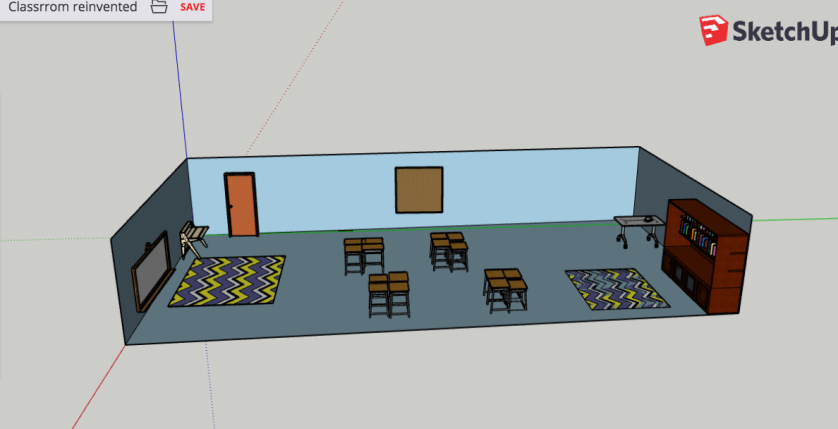
There are many take aways I have from CEP 811. One of my biggest proud teachers moments was when we were tasked with recreating our learning space. I thought that this was going to be such an easy week because it was something I had already had the privilege of doing. Until I started using Sketch Up. This program was such a challenge for me. I had never used anything like it before though, so I had no background knowledge on a program like that. I kept working hard even when I was yelling at my computer and playing around with it, and exploring, and then like that, I was able to put a replica of my old classroom together in minutes.

I felt like with this course I was really faced with going through the learning process again. A process that my students go through on almost a daily basis. Experiencing this first hand helps me to appreciate my students as learners and problem solvers. Tasks shouldn’t be easy, they should challenge us. I also enjoyed being able to include my students in my learning as I explored my maker kit and completed my weekly exploration activities. From our remix video to our last week of exploring assessment, I have always had something to share with my students, and that has been incredible.

Going forward as I introduce new ideas with my students, I want to try to have them explore more. I want to give them more opportunities to find the answers on their own. I want to give them a chance to create their own learning experiences, and I want to give them chances to be a maker. This course has taught me that all students are capable as long as they are given the tools and opportunities to show what they are made of.

References:

E. (2010, July 20). James Paul Gee on Grading with Games. Retrieved from https://www.youtube.com/watch?time_continue=693&v=JU3pwCD-ey0

Dougherty, D. (n.d.). We are makers. Retrieved from https://www.ted.com/talks/dale_dougherty_we_are_makers


Assessing Creativity

Can you assess creativity? This is was the big question this last week in CEP 811. As a first grade teacher I can say assessment comes up almost on a daily basis, and I am assessing students constantly. Which lead me to my own question this week, are my assessments purposeful?

When reading Grant Wiggin’s blog post on assessing creativity I immediately connected with his story about the group of ELA teachers and their writing rubrics. Writing rubrics is something that my first grade team talks about all the time. We have our common core continuum we are suppose to use but two things come to mind every time I get that rubric out to use; is it achievable, and does it help me drive instruction. Thinking about the first point, is this achievable is where I really connected with the article. Writing is such a creative activity, and  adding a thousand grading points on a first grader just entering the writing world does not teach them to be an engaging writer. In fact in most instances it may intimidate them to never write again. If I broke the rubric down to 3 points which were understandable though, I think that our rubric would be achievable and could easily drive instruction. Those 3 points being; is it readable, is it engaging, and is it complete.

If you think of it in order to be readable it has to have all the grammar and phonics components, if it is engaging it has words that catches the readers/ listeners, and if it is complete it has all the components it needs. It is not nit picking a six year olds work, and it leaves room to show growth. I think that this approach should be taken when assessing any creativity or problem solving assignment.

In answer to the question can creativity be assessed, that answer is yes. There is a critique out there for anything. If you do not prepare your students for criticism they will not see the need to improve and excel and will always think that they are doing great. In James Paul Gee’s video he says to hold our students to high standards. I can tell you with teaching young children this was a hurdle I had to overcome, but students will perform to the standards you hold them to. If you hold them to low standards they will show little academic and personal growth, and they will get use to sliding by. If you hold them to high standards they will problem solve to achieve those standards, on the way they will probably teach you something, and they will be ready to change the world.  

In getting back to assessing these creative thinkers as long as there’s an objective to learning that is visible, any way the student achieves that objective is able to be assessed. I think it is easy for teachers to stick to a rubric because it gives a common way to assess students on an even playing field. It is clear though in any classroom, anywhere no student is the same, and with that, should not be assessed the same. There are many ways to solve a problems, there are many ways to achieve an objective, and there are many ways to assess success.

References

On assessing for creativity: Yes you can, and yes you should. (2012, February 04). Retrieved from https://grantwiggins.wordpress.com/2012/02/03/on-assessing-for-creativity-yes-you-can-and-yes-you-should/

(2010, July 20). James Paul Gee on Grading with Games. Retrieved from https://www.youtube.com/watch?time_continue=693&v=JU3pwCD-ey0


Choose #MakerEd

Maker Education is something that I was introduced to a few years ago when attending the MACUL conference. Since then recreating my classroom into a maker space has been something I have aspired to do. CEP 811 has given me such great information to contribute to this vision I have for a student centered room, filled with learning experiences.

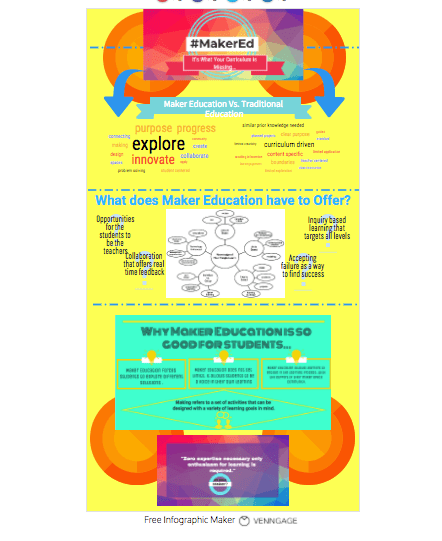
As CEP 811 winds down we were asked to reflect on our progress in the making process, and explore ways to promote #MakerEd to others using all this new research. I was truly inspired by the 3 different maker spaces that were researched in one of the articles we read titled, Learning in the Making: A Comparative Case Study of Three Makerspaces. This study showed that there is no right or wrong way to create a space for makers to grow. Just as long as the essentials are included. Acorss the board all three spaces had collaboration, limited boundaries, and a diverse social group with common goals. Thinking about that in a classroom setting this can seem overwhelming, so I included an infographic to show the positive effect #MakerEd can have on students.

Screen Shot 2017-12-10 at 11.14.47 PM

Using maker education we can open doors for students to explore ideas we never even imagined was possible. Maker education makes equitable learning possible, and teaches students to create a community that fuels learning. In a world where anything is possible choose #MakerEd.

References:

Figure 2f from: Irimia R, Gottschling M (2016) Taxonomic revision of Rochefortia Sw. (Ehretiaceae, Boraginales). Biodiversity Data Journal 4: E7720. https://doi.org/10.3897/BDJ.4.e7720. (n.d.). doi:10.3897/bdj.4.e7720.figure2f

Sheridan, K. Halverson, E.R., Litts, B.K., Brahms, L, Jacobs-Priebe, L., & Owens, T. (2014) Learning in the making: A comparative case-study of three maker spaces. Harvard Educational Review, 84(4), 505-565

Halverson, E.R. & Sheridan, K. (2014). The maker movement in education. Harvard Educational Review, 84(4), 495-465.

The Classroom Reinvented

This week, CEP 811 really got me excited. We were tasked with thinking about our classroom space, and thinking about how we could reinvent our area to promote student learning. The most exciting part about this week is that I got a chance to do this when I  adopted flex seating into my classroom 3 years ago after attending the MACUL conference.  In my blog post this week I am going to work a little backwards, first I am going to show where this idea began, the steps I took to make my classroom vision a reality,  the results that became from my vision for my classroom, and how it beautifully fit into my learning this week.

My Traditional Classroom

Walking into my classroom 4 years ago you would have seen the typical items. I had desks and chairs where students engaged in independent learning. I had a library area with books and computers. I also had a gathering area where students came to do most of their learning, and listen to books. It was very traditional, extremely limiting, and the only thing creative were my anchor charts. I remember getting very frustrated when no desk setup would work, and I was constantly spending time moving kids around. I even remember in my last year with this class setup reading the article “What Your Classroom Setup May Be Saying to Students,” which lead me to arrange my students in clusters to promote collaboration. I do not have a good picture of how my room looked like back then, but using Sketch Up, it looked very similar to the picture below.

Screen Shot 2017-12-03 at 8.16.50 PM

I thought this was how my classroom was always going to be and I would eventually find a desk combination that worked. Until I attended the 2014 MACUL Conference. I cannot even tell you how many teachers were talking about classroom spaces and bringing up the coffee shop model when thinking about where students would do their best learning. I left the MACUL conference that year with a vision that needed a plan.

Making the Change

Myself as well as third grade teacher in my building were determined to create a classroom for our students that promoted comfort, choice, engagement, and collaboration.  We both started with thinking about what our classrooms needed to achieve success in these areas. Different types of seating could provide both comfort and choice. Plants could also add to the comfort. Big windows already in our classrooms added the natural light, but we found blue sleeves to put over our fluorescent lights to reduce the flicker and dim the brightness. Instead of desks to promote collaboration we thought tables would be better. We got a lot of inspiration for Erin Klein’s Blog Kleinspiration, where Erin talks about how the learning environment, including physical spaces, plays a key role in how students learn.

After we had a plan of what we wanted to do we had to figure out how we were going to make our classroom experience come to life. This is where mine and my colleagues experiences differ. I want to share both though.  My colleague was able to redo her complete classroom makeover with funds received through her donor’s choose project. I applied for a classroom makeover grant through the Meemic foundation which gave me $1,000 to put towards creating my dream classroom. Most of the money was used to purchase seating options, some of it was used to purchase organization bins, and supplies to build a bench that doubles as storage for our classroom library. I even had teachers in other school that donated furniture like a table where students could stand to work if they wanted to. So much help and support went into the vision that is my classroom now.

My Classroom Now

When you walk into my classroom now it looks like such a fun place to learn. In place of desks and chairs, there are tables with a variety of different seats to choose. It’s a classroom centered around choice. The students have access to every area of the room and can move around it as they wish. In the tables groups they sit in they get to choose who they sit with, and work with which increases their willingness to learn, and engages them in helping each other. The plants around the room warm up the space, and the blue light sleeves helps tone down the fluorescent lights. It’s such a comfortable environment, and my students have nothing but positive things to say about it. During our school visit last year from the state librarian he asked my students what they like the most about their classroom. The response of one of my students warmed my heart, as she answered with, “It’s a cozy place and I feel safe to do my best.” Photos of her cozy space can be seen below.

My Learning this Week

My learning this week made me feel confident in my choice to convert my classroom into a fun learning space. Now I think I could add some other components to improve my classroom environment. Other than wanting to try an air purifier, after Reading Kyle Vanhemert article I feel that the changes I made in my classroom hits all the major areas of a classroom that affects student learning positively. An environment where my students can not only learn, but engage in a learning experience.

References

2018 MACUL Conference. (n.d.). Retrieved from https://maculconference.org/

Creative Strategies for Redesigning Today’s Classrooms via @All4Ed & @edwebnet! (2015, July 22). Retrieved from http://kleinspiration.com/creative-strategies-for-redesigning-todays-classrooms-via-all4ed-edwebnet/

SketchUp Make. (n.d.). Retrieved from http://www.sketchup.com/products/sketchup-make

VanHemert, K. (2017, May 02). Study Shows How Classroom Design Affects Student Learning. Retrieved from https://www.fastcodesign.com/1671627/study-shows-how-classroom-design-affects-student-learning


Maker Kit Lesson Plan

This week in CEP in 811 we were tasked with pulling all our knowledge thus far in the class to create an innovative Maker Kit lesson using our Maker Kits. I started out the week with a Next Generation Framework based science lesson. Equipped with LED lights I was ready to take the Makey Makey to the class and try it out. After a little inspiration from my students though, and some collaboration with my peers, I decided to turn the Makey Makey into a center using Scratch. This way multiple student could use the Makey and it could be a frequent tool used in my classroom. I decided to turn to the Common Core to pick an area of focus.

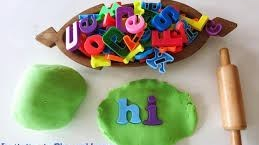
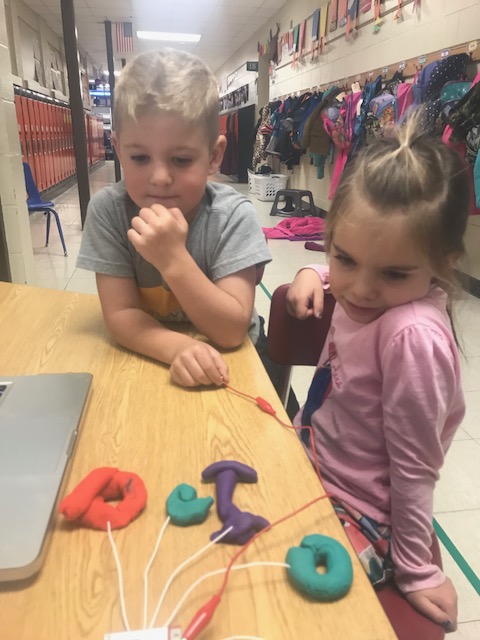
Decoding words in first grade is our biggest focuses. We use decoding words in both reading and writing. After assessing my students using the spelling inventory with Words Their Way, I realized short vowels, long vowels, and vowel teams are all  areas my students need to work on. Using Makey Makey they can create the vowels do they are seeing what they look like, hear the vowel sounds and letter sounds, and identify them within a word pattern. This trifecta of word decoding will better help my students with retaining and applying this vowel knowledge in the future during their reading and writing.

Thinking back to Richard Culattas Tedtalk I did not want to create a lesson that just replaced something else I was already doing. I could have had created a scratch junior word hunt that would have used the Makey Makey but that still only was helping my students to identify. Now using scratch with the play doh the students are hitting many areas of learning with not only identifying but creating and applying. This active learning which is described in How People Learn, will help my students to transfer their learning of vowels into daily practice. Working in a group can help them to help their classmates stay accountable as they learn from their mistakes and discuss.

After collaborating with my peers this last week I realized that with one Makey kit it served better use in a center. Originally I wanted to use it during an exploratory science experiment. I may still do that, but while sitting with a student who was playing with the play doh making letters and words I was inspired to try using the Makey kit weekly with a variety of phonics skills during our word study time. With the small group I worked with this last week their excitement really reassured me this was the best use of my one Makey Makey Kit. Please check out my lesson here.

IMG_7353
References

The Education Intelligence Platform. (n.d.). Retrieved from https://www.illuminateed.com/

English Language Arts Standards » Reading: Foundational Skills » Grade 1. (n.d.). Retrieved from http://www.corestandards.org/ELA-Literacy/RF/1/

Get The App. (n.d.). Retrieved from https://labz.makeymakey.com/d/

Read “How People Learn: Brain, Mind, Experience, and School: Expanded Edition” at NAP.edu. (n.d.). Retrieved from https://www.nap.edu/read/9853/chapter/1

Scratch – Imagine, Program, Share. (n.d.). Retrieved from https://scratch.mit.edu/

Series. (n.d.). Retrieved from https://www.pearson.com/us/higher-education/series/Words-Their-Way-Series/2281883.html

(2013, January 10). Reimagining Learning: Richard Culatta at TEDxBeaconStreet. Retrieved from https://www.youtube.com/watch?time_continue=5&v=Z0uAuonMXrg

Technology, Immediate Feedback and Progress

download (1)


How can technology be used in education? That was one of the questions I thought about this week as I tackled CEP 811. I began this week by reviewing Richard Culatta’s Tedtalk about the shortcomings teachers are having as they begin to use technology in their classrooms, he also talked about how technology may be used successfully in a classroom. While he was talking about how technology should be used in classrooms, I thought of my own classroom, and questioned if I was using technology appropriately. One program that I use is MobyMax. I love this program and the immediate feedback it gives my students. In thinking about this last week, I thought about my students that have been using Moby Max to reinforce my language lessons. Going further I was brought back to a memory of one of my students turning around face lit up pointing to her computer screen which was shining a large 100% icon for her completing her lesson on proper nouns. She was so proud of herself, and took all the ownership in her learning. It was the feedback that immediately popped up for her that let her know she was doing a good job.

Feedback is in the top 10 influences on student achievement according to John Hattie’s, The Power of Feedback. As I began my first research article read on the topic of immediate feedback that stat made so much sense to me. If that feedback is immediate is can only increase student achievement.  However, if the feedback has no direction it will not play a significant role in achievement and mastery. Simply saying, “good job” to a child as they reread a page for understanding on their own does not tell them specifically what they are being successful in. They will have an initial excitement for the term good job, but will not understand what their good job was for. If the same teachers says, “I noticed you reread that sentence to make sure it made sense, that is what good readers do.” Makes the feedback specific and that will make the student more likely to make rereading a regular practice. Hattie states that feedback is effective when it consists of information about progress. (Hattie, 2007).

To tie the idea of feedback into technology this brings me to the second article that I read this week. Enhancing feedback provision through multimodal video technology,  by Shao-Ting and Alan Hung. This article helped me to understand how feedback through technology can benefit students. They begin by discussing that there are three types of feedback, interactive, intrusive and delayed. (Ting and Hung, 2016 Pg. 91) They list reasons for why each types of feedback has its pros and cons , and when they take place in a student’s understanding of a concept. The same page continues to talk about technology and how it can enhance feedback. For example video feedback on a student’s assignment can eliminate the misunderstandings from written feedback. Much like texts can be misunderstood because of the lack of tone, written feedback can also be misunderstood. Peers contribution into the feedback also increases mastery of the skill. Take this course for instance, every week we are able to view peers work in the same topic, and from this we can give them feedback through comments. We also can see how they completed the work and clear up any misunderstandings that may have been had about one’s own work.  This increases understanding for the concepts.

To go back to the story I began with about one of my students. Her individualized learning program gave her immediate feedback on how she did on that lesson which let her know she was ready to move onto the next skill. This goes along with what Culatta says about us putting the learning over the schedule. Had she not gotten 100% the program would have had her retry the learning to hopefully clear up and misconceptions. Either way she is able to get feedback immediately which is a major pro to learning through technology programs. Feedback is within the top 10 influences on student achievement, knowing that I ask how do you use technology to provide feedback to your student’s?

References

Hattie, J., & Timperley, H. (2007, 03). The Power of Feedback. Review of Educational Research, 77(1), 81-112. doi:10.3102/003465430298487

Hung, S. A. (2016, 07). Enhancing feedback provision through multimodal video technology. Computers & Education, 98, 90-101. doi:10.1016/j.compedu.2016.03.009

Learn twice as fast. ™. (n.d.). Retrieved from http://www.mobymax.com/

(2013, January 10). Reimagining Learning: Richard Culatta at TEDxBeaconStreet. Retrieved from https://www.youtube.com/watch?v=Z0uAuonMXrg

Thrifting… It’s Not Just For Crayons

This week in CEP 811 we looked at something that most teachers do everyday…repurposing. Repurposing happens all the time in education. Take a geoboard for instance, in math it can be used for shapes, area, perimeter, graphing, and probably a few other ways I have not discovered yet. There are many benefits to repurposing, mostly though, it is because teaching is evolving all the time and having the right tools to engage students is so important to be able to have students grasp a concept.

In learning about repurposing this week, and what it has to do with educational technology, the question of “what is an educational technology?” was brought up. The answer that MAET uses, is that there is none and that answered just had me so intrigued.  I had never thought that many technologies were not specifically made for education but have been repurposed for education. I better understood this after reading Punya Mishra’s Rethinking Technology & Creativity in the 21st Century: Crayons are the Future. All technology is great but if it does not integrate into the curriculum that you are teaching it is not a purposeful use of instructional time. This is where repurposing technology needs a little creative thinking.

Prior to this week’s assignment I had used Scratch Junior with my students. I use our speaking and listening standards to teach the blocks, and then connect that to writing stories. This week however, I used scratch to toy around with my new Makey Makey Kit. To get use to the Makey Makey I started with their Bongos App and played on those. When I saw scratch listed as one of their Makey Makey Apps I got instantly excited. To get started I watched this tutorial video to add sound.

Screen Shot 2017-11-05 at 7.45.16 PM

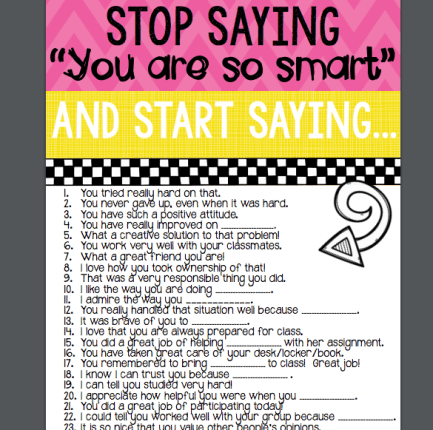
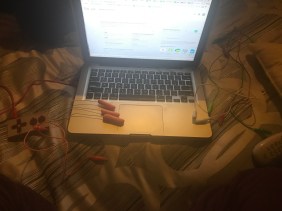
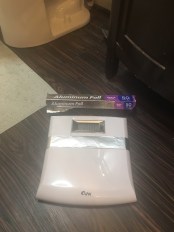
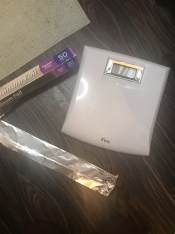
As I explain in my video I have been working on goal setting with my students. Using language from Peter Johnston’s Choice Words, and Growth Mindset Phrases, I have been trying to keep my students motivated and feeling successful. To try this out with Makey Makey kit I thought I would program some growth mindset phrases that I use with my students to help me feel successful with my weight loss goal I am trying to achieve      IMG_7269.jpgIMG_7272IMG_7270.jpg


Using some tinfoil I connected my scale to EARTH, and using carrots i was able to program phrases into scratch that que up when touched. Depending on what the scale says I am able to stay motivated with the growth mindset phrases. Now if I can get this programmed in my classroom to give my students that instant feedback, we will be in business. Stay tuned for more ways to repurpose my Makey Makey Kit.

https://www.youtube.com/watch?v=S-hCrtnqHrw

How To Use Makey-Makey to Motivate Your Scale

  1. Get your Makey Makey Kit @ http://www.makeymake.com
  2. Using labz.makeymakey.com scroll down to scratch.
  3. Scratch will take you to their creation lab where you can create a new project. Sign up for a scratch account is free.
  4. To use the Makey Makey controls you are going to want to use the events tab which is brown.
  5. That is where you program when the different sounds to play.
  6. Once you have your sounds programmed you can connect them to any insulators. I used carrots.
  7. Plug your EARTH board into you device and connect your insulators to the back side to coincide with the controls on scratch.
  8. Last step is to make a connection between EARTH and your Scale using and alligator clip and tinfoil.
  9. Tap on the carrots or any other insulator and stay motivated.


References

Mishra, P., & The Deep-Play Research Group (2012). Rethinking Technology & Creativity in the 21st Century: Crayons are the Future. TechTrends, 56(5), 13-16.

How to Record Your Voice on Scratch Makey Makey. (2016, March 27). Retrieved from https://www.youtube.com/watch?v=kobQ83ivLII  

Johnston, P. H. (2004). Choice words: How our language affects children’s learning. Stenhouse.

Makey Makey | Buy Direct (Official Site). (n.d.). Retrieved from https://www.makeymakey.com/ 

Thrifting. (2017, November 05). Retrieved from https://www.youtube.com/watch?v=S-hCrtnqHrw

Remixing and Making

“We are born makers, we have this ability to make things, and to grasp thing with our hands. We don’t just live but we make and create.” (Doherty 2011) It is hard to believe that in this big world we are all makers. When I think about a maker I think about Henry Ford, Alexander Graham Bell, Steve Jobs, etc… Before this week in CEP 811,  I wouldn’t have thought of myself as a “maker”. After this week though I know that I am a maker. I know my students are makers. We observe, create, repurpose, and remix our surroundings constantly playing the role of the maker.

This week in CEP 811 we were tasked with remixing a video to sum up our learning about the maker culture, and how it shapes communities. Using WeVideo I summed up my learning in a remixed video. While researching clips, and pictures for my video I stumbled upon a lot of information about maker fairs. The creativity at these fairs was beyond my wildest dreams. Even more impressive was the community of innovators you would see all smiling for each others creations. It reminds me of my students when we share projects and writing with the class. They are so excited for each other, and eager to help each other when improvement is needed. Failure will happen, and as the saying goes two heads are better then one. Having a maker community to help trouble shoot and brainstorm will help you be a better maker. 

What I learned this week is whether you are cooking in the kitchen or engineering the first self-driving car, we are all makers. As a teacher I am a big part of creating a classroom community that engages the student in learning in a comfortable setting. A classroom that focuses on living, learning and building on old ideas with new ones. Remixing everyone and their ideas to create a community of makers, because, at the end of the day we are all makers.


References

Are you a maker? (2017, October 31). Retrieved from https://www.youtube.com/watch?v=QlWybYhKluw

Boston Mini Maker Faire. (n.d.). Retrieved from http://www.bostonchildrensmuseum.org/boston-mini-maker-faire

Brains on Wheels…Brains on Leave…Brains on Strike… (2011, September 14). Retrieved from https://misterdanso.wordpress.com/2011/09/01/brains-on-leave/

Donahue, M. Z. (2015, June 12). What Is a Maker Faire, Exactly? Retrieved from https://www.smithsonianmag.com/innovation/what-maker-faire-exactly-180955574/

Dougherty, D. (n.d.). We are makers. Retrieved from https://www.ted.com/talks/dale_dougherty_we_are_makers#t-549465

Hand drawn idea concept. (n.d.). Retrieved from https://www.freepik.com/free-vector/hand-drawn-idea-concept_829848.htm

John Dewey: My pedagogical creed. (2013, June 21). Retrieved from http://infed.org/mobi/john-dewey-my-pedagogical-creed

Maker Faire. (n.d.). Retrieved from https://www.pinterest.com/mononaterrace/maker-faire/

S. (2014, March 27). Top 50 City Lights Seen From Space. Retrieved from https://www.youtube.com/watch?v=4PV7RJMYd64

J. (2007, February 25). Early Flight (b&w, silent, 16mm) Vintage Films. Retrieved from https://www.youtube.com/watch?v=iMhdksPFhCM

M. (2016, December 08). Funny Ironic Signs and Photos compilation. Retrieved from https://www.youtube.com/watch?v=qdbGc-j6zVY

T. (2010, December 07). I think I can, I think I can- the Little Engine that Could. Retrieved from https://www.youtube.com/watch?v=Yx9xO98kcBU