As part of one of my final assignments in CEP 813 I am using feedback received in editing a previous assessment I have created in 2 prior posts. This post serves as my final draft of my Formative Assessment Design.
In thinking about what to assess in our 2nd grade curriculum, I am over whelmed with options. In our core subjects (i.e. math, phonics, writing, and reading) we already have many assessments that we use effectively. However when it comes to social studies and science our assessments are severely outdated. They consist of matching and cut and past activities, that were created in the early 90’s. This is where I think our biggest need for assessment is. In thinking about where we are currently, in our science and social studies units, we are teaching the stages of the water cycle.
Purpose
The purpose of this assessment would be to see the students understanding of the water cycle, and the various stages in the cycle. This goes along with the Next Generation Science Standard:
Performance Expectation
Grade: K-2
The instruction which I will talk a little more about next, will reflect the assessment at each stage taught of the water cycle. To explain better each day will consist of a lesson on the stage in the water cycle:
- Day 1- Precipitation
- Day 2- Run-Off
- Day 3- Evaporation & Transpiration
- Day 4- Condensation
- Day 5- All together
After each day of lessons the students will have a chance to engage in the assessment and show their understanding of the stage we worked on that day, with the idea of building on that learning as we progress through the water cycle. Bt breaking it down step by step, I can check in with students and adjust instruction as needed to help them with their understanding.
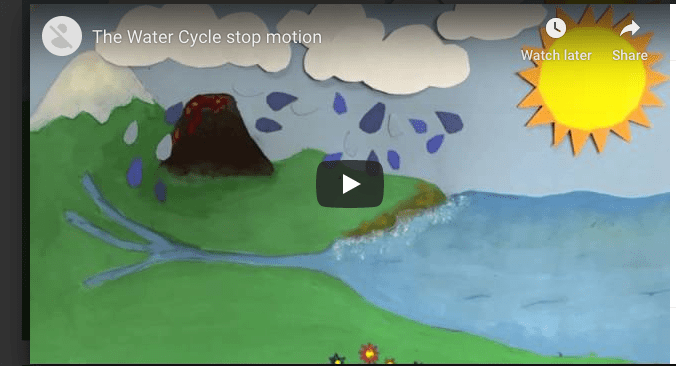
- We would start with the lesson on precipitation
- Starting with a presentation on the topic and showing examples
- Next we would do a group guided activity to enforce understanding
- Assessment: Show what you know-using the iPads you will create a stop motion video of just the precipitation of the portion of the video using the cut outs and your scenery.
- Showcase: Students would be able to show their portion to a partner in order to get peer feedback on their video. They can adjust their video with their partner based on their feedback.
- Review and Feedback: I would review their videos for that day, and adjust instruction for tomorrow by meeting with a small group to reteach in the morning. Or extend the lesson on that topic a day if I feel the majority of the class is needing further instruction.
i would repeat this outline with the other stages of the water cycle.
It will be clear to the students the water cycle can be demonstrated in many different ways as long as it has the components explained in the instructions which can be found here. With this being an ongoing project now through the unit, the instructions will have to change slightly, and instead of them adding each part in one sitting, the students will only have to work on one part of the cycle at a time. I think this will make for more creative time, and end with more detailed videos. So the instruction above show the outline for one day, and would change each day for the next stage we would be covering. However the outline would stay the same. The only change would be when they begin their video they would just be editing the previous video to add on to the clip.
I outlined a day of instruction from the unit in this google slide which you can access by clicking the image below. This will also act as a place to display instructions as well as showcase student work by the students adding their link to the slide, which is a skill that is taught earlier in the year during research projects.
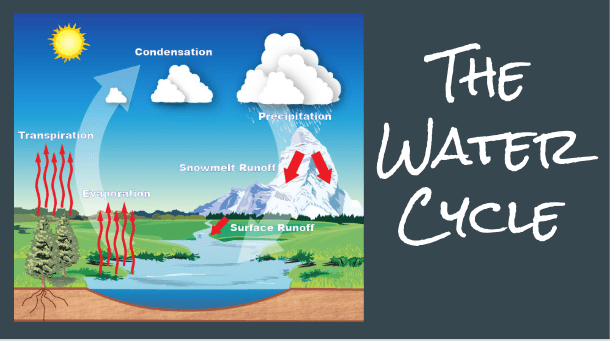
- Stage was displayed correctly in the video
- Movement of the stage was accurate from where it goes in the cycle
- Stage was labeled correctly
Each day after review of their videos the students will get their rubric/checklist to see which parts they completed. If they are missing parts they can have time to redo it before beginning their next stage in the cycle. If it is an individual or a few that need further instruction I will meet with them in a small group to clear up any misunderstandings an reteach before letting them redo their video clip. If the whole class is struggling I will re assess my instruction strategy and reteach extending the unit.
This type of feedback aligns with the 7 Principles very nicely. The checklist and rubrics show what the expectations of good work should be by giving a criteria. With their partner as well as with the rubric the students are given a chance to self reflect and make adjustments as needed. It shows the students where they are in the learning process by giving them the areas they did well as well as the areas they still need to work on in a single stage of the cycle. buddy feedback as well as teacher rubric feedback gives students a way to talk about what they are doing well on and gives opportunities to problem solve if there are parts that need work still. When students are done they are able to add their videos to the slide giving them time to showcase their work, understanding, and takes the assessment stigma away from it. With the information obtained from reviewing the videos I can meet with students on an individual to whole group level and close the understanding gap if students are still struggling. Lastly, I am able to adjust my instruction given the results of the video reviews.
Nicol, D., & Macfarlane-Dick, D. (2006). Formative assessment and self-regulated learning: A model and seven principles of good feedback practice. Studies in Higher Education, 31(2), 199–218.

 Learning with Lindsay